Showing posts with label Siracusa. Show all posts

Wednesday, November 25, 2015

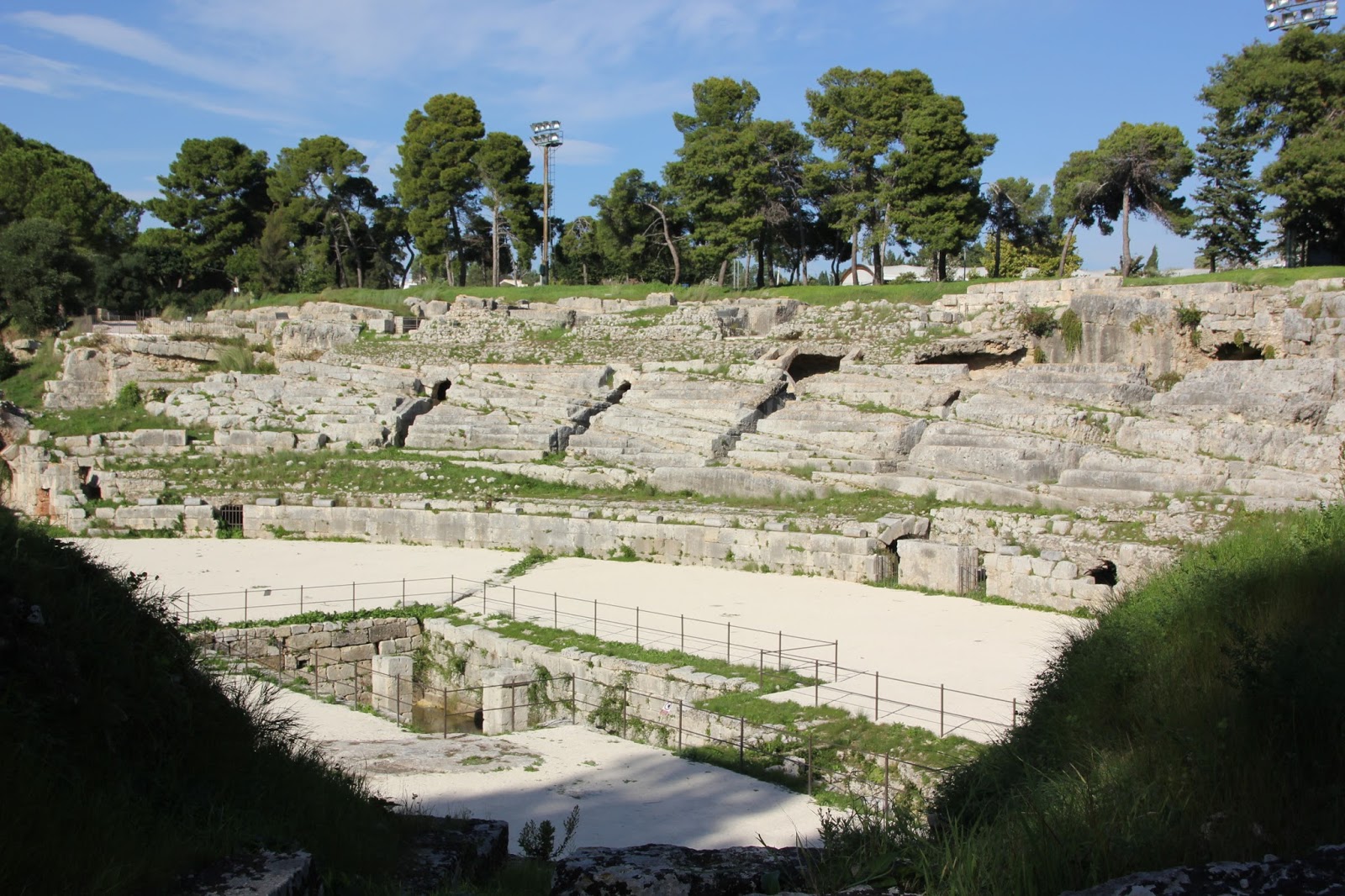
Siracusa Neapolis Archeological Park

November 21, 2015


Construction of the Roman Ampitheathre began about 21 BC.  It was mostly carved into the existing bedrockl.


Greek Theater (Teatro Greco)

Construction of the Greek Theatre dates to the 5th century BC.

The Greek Theater in Syracuse was a meeting and performance space par excellence. Tragedies, popular assemblies and circus games, (the latter of which were enjoyed only for a brief period) were all held there.
All male casts, complete with polemic discourse, masks, chorus, and satyric character types, performed the works of Aeschylus, Sophocles, Euripides among others. The glories of Greek drama, their epic myths and legends of heroes had been revived and returned to the modern age.
Performances were generally held during public holidays, as theater was a social focal point, ideal for those with free time, offering entertainment to the community as a whole.
Its original construction dates from the Fifth Century B.C. but in the Third Century B.C. it was reconstructed under Hiero, and has remained almost as it was since that time. The material for its construction was taken directly from the hill supporting the theater.
A porch ran on a terrace around the auditorium opening onto an artificial cave with a small nymphaeum (a cave with a monumental fountain consecrated to a nymph).
The Greeks were an extremely "dei conscious" people, and the theater had a precinct with a temple and an altar.
Scenery and stages, though sometimes painted, were simple and fixed. Changes of location were generally announced or narrated. Focus was on the language, the plot and the moral or message of the drama rather than technical sophistication and visual spectacle.
The aim of performance was to raise a particular subject to the fore socially, to offer an opportunity for collective and individual catharsis through identification with a character or element of the plot, and finally, to entertain.
Around 1500, during the Spanish occupation, the theater, which had fallen into disuse and neglect, was quarried for fortifications and defence materials.
Later in the same century, the aqueduct which had carried water to the nympheum, passing over the theater, was reactivated. The auditorium itself was filled with mills, utilizing the water from the aqueduct. However, in the process, a substantial part of the staging and seating, previously filled with precious coloured marble was damaged, and the precious marble fragments lost forever.
In the Seventeen Hundreds, interest in antiquity revived. In many cases, ancient artefacts were uncovered, and by the nineteen hundreds had been restored to their original functions, and the ancient theater in Syracuse was no exception. Tragedies were once again performed there, as they had been in antiquity.


Tuesday, November 24, 2015

Siracusa

November 21, 2015

We spoke in the Palermo Stake Conference held in Siracusa.  Prior to the afternoon session, the Stake President took us to the Island of Ortigia to show us some of the unique features of the area.

*  *  *  *  *

The Island of Ortigia 
The simultaneous presence of a fresh water source and a coastal bay suitable to protect ships at anchor attracted the Greek colonists of Corinth to the island (at that time still a peninsula) of Ortigia in Sicily in 734-33 B.C.     

Here the Greeks founded the city of Syracuse, chasing out the Sicels who had already populated the area for several centuries.


The choice proved to be fortunate, as the newly founded city soon after started to expand onto the mainland, a set of five articuled principal areas, together called a "pentapolis". With an overall population on the order of hundreds of thousands of people this pentapolis represented one of the largest metropolises of the ancient Mediterranean before the days of Roman conquest and decadence.

Ortigia is one of a few centers of the Mediterranean to conserve its ancient Greek urban framework in such a way as to still be legible on a map. The structure of the streets, despite more than two millennia of evolution, still respects the "comb teeth" orientation that radiates from a principal street, the Via Sacra or Sacred Way (known today as the Via Dione), which runs through the center of the island.

*  *  *  *  *

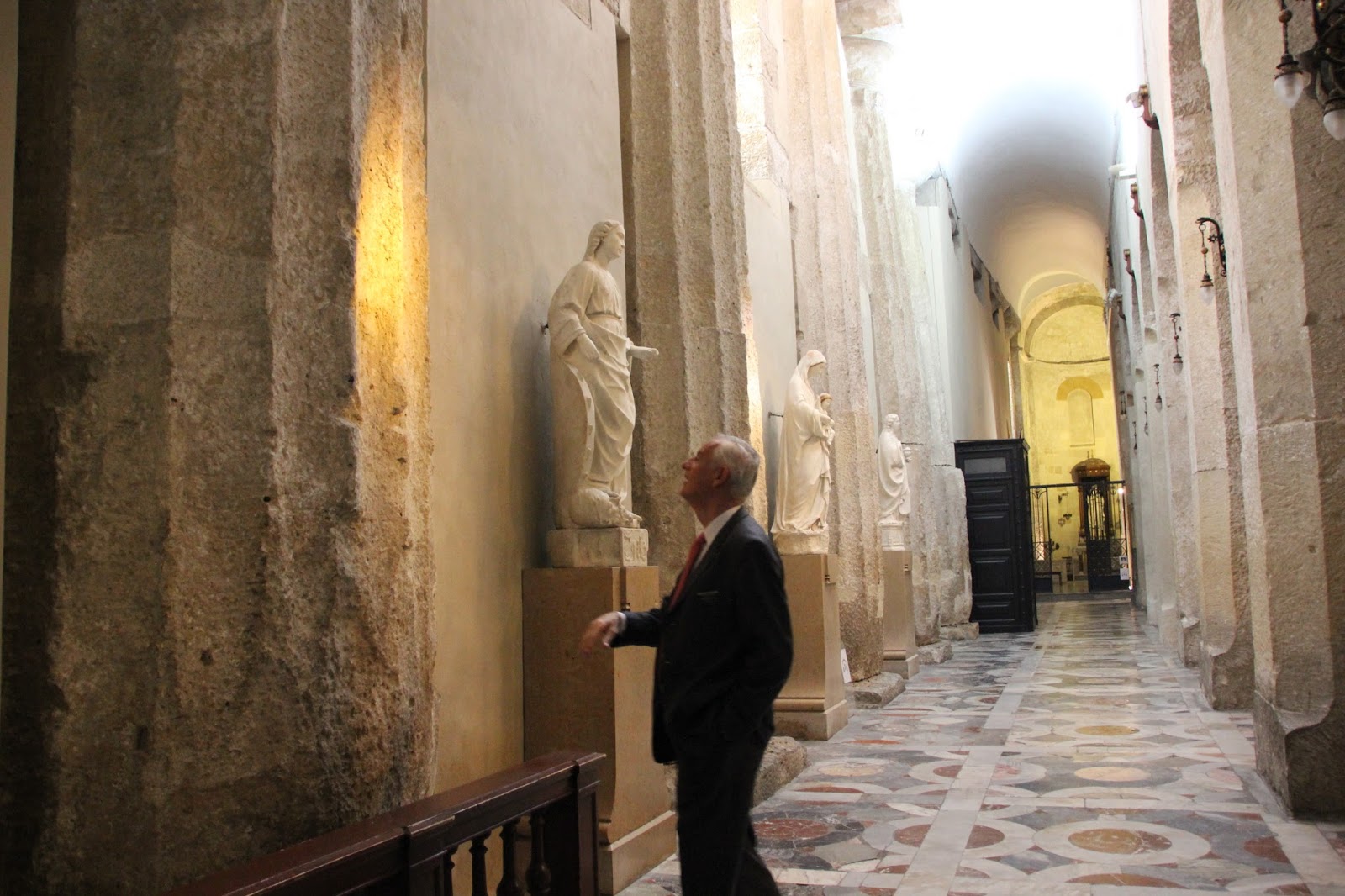
Duomo

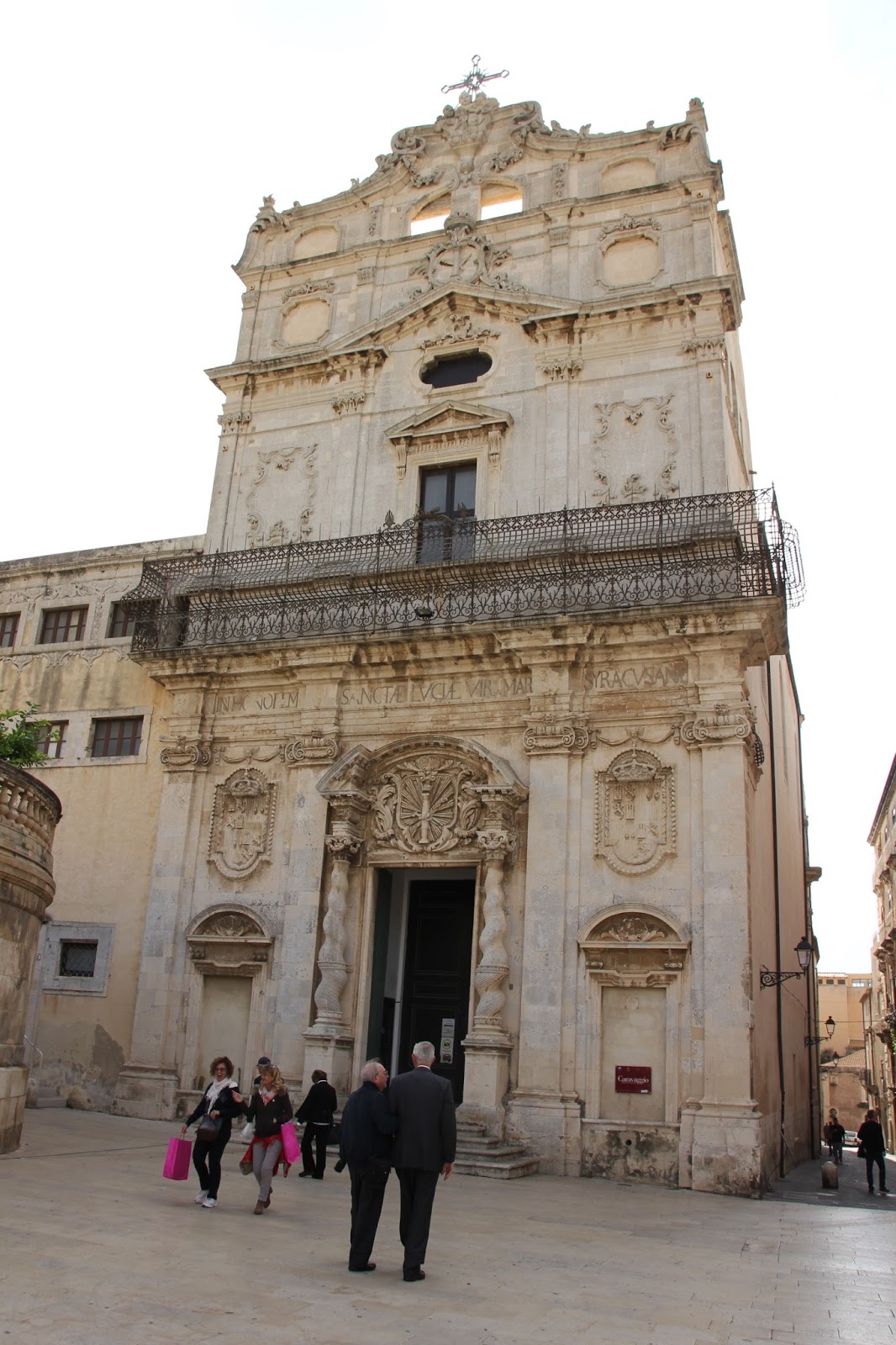
Siracusa's Duomo is one of the town's most celebrated sights. The building records the many ages of the town. Once it was the Greek Temple of Athena, with a giant gold statue of the goddess on its roof. The massive Doric columns of the temple are still visible; rather wonky after earthquake damage. The wall above the columns along Via Minerva, with battlements, is Norman in origin, while the fancy Baroque facade was a replacement after the 1693 earthquake. Inside the Duomo, you can see more evidence of the temple origins of the building, and more of the original structure. Those interested in relics can admire some fetching displays of saints' bones in the chapel to the right of the main altar, where there are also some appealing fragments of fresco.
*  *  *  *  *

Fountain of Arethusa
In ancient Greek myth, the origin of the spring was attributed to the fate of a nymph, Arethusa, who was transformed by the goddess Artemis into a spring to escape the stalking courtship of Alpheus (son of the god Oceanus). He, in despair, was in turn transformed into a river by Zeus and thereby succeeded to finally mix his water with that of Arethusa. The myth probably attempts to explain the brackish taste of the water that results from the infiltration of the bordering sea. 


This pond also has a second peculiarity: at its center a collection of wild papyrus has grown for millennia. This thicket, together with the similar growths along the Ciane/Anapo river, constitutes the only wild papyrus existing in Europe. 

*  *  *  *  *


Duomo


The foundation and the pillars were built pre-Christ.


Spring of Arethusa with papyrus


Stone for washing clothes.  Until 90 years ago the women came to this underground spring to wash their clothes. 

500 year old Banyan tree

It is believed Paul stood on this rock to teach when he was in Siracusa.

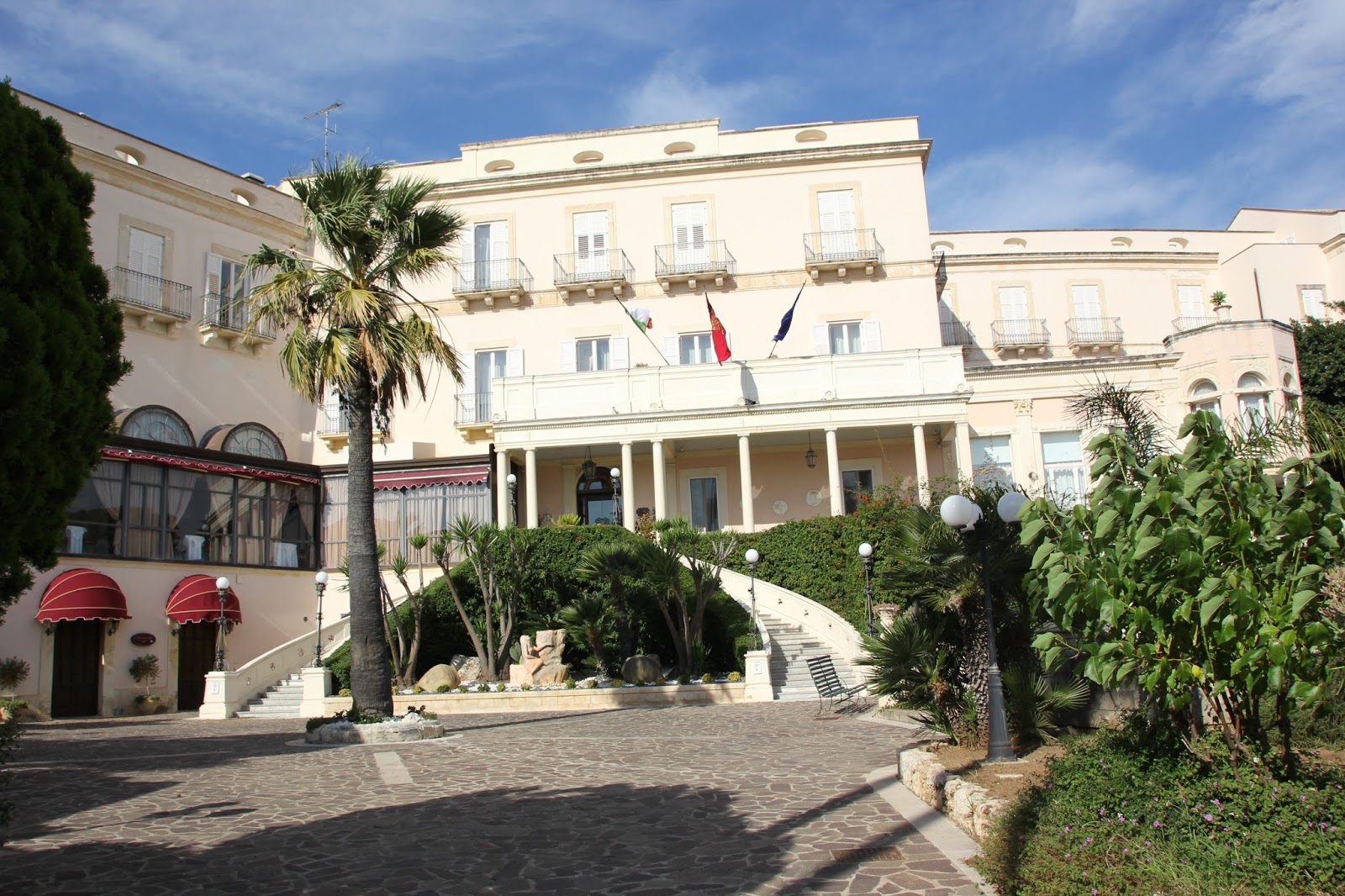
Grand Palace Hotel Potili built on the edge of a quarry